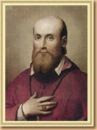
Christian Education

"Since all Christians have become by rebirth of water and the Holy Spirit a new creature(8) so that they should be called and should be children of God, they have a right to a Christian education. A Christian education does not merely strive for the maturing of a human person as just now described, but has as its principal purpose this goal: that the baptized, while they are gradually introduced the knowledge of the mystery of salvation, become ever more aware of the gift of Faith they have received, and that they learn in addition how to worship God the Father in spirit and truth (cf. John 4:23) especially in liturgical action, and be conformed in their personal lives according to the new man created in justice and holiness of truth (Eph. 4:22-24); also that they develop into perfect manhood, to the mature measure of the fullness of Christ (cf. Eph. 4:13) and strive for the growth of the Mystical Body; moreover, that aware of their calling, they learn not only how to bear witness to the hope that is in them (cf. Peter 3:15) but also how to help in the Christian formation of the world that takes place when natural powers viewed in the full consideration of man redeemed by Christ contribute to the good of the whole society.(9) Wherefore this sacred synod recalls to pastors of souls their most serious obligation to see to it that all the faithful, but especially the youth who are the hope of the Church, enjoy this Christian education."

Gravissimum Educationis
Showing posts with label Catechism of the Catholic Church. Show all posts

Wednesday, May 27, 2009

The Catechism of the Catholic Church in Context


Joseph Cardinal Ratzinger


Introduction


The French edition of the Catechism of the Catholic Church was presented to the public in Paris Nov. 16, and on Dec. 7th the Holy Father formally presented it to the Christian world. In the interim the Italian and Spanish editions have been made available; other translations will follow shortly. The official Latin text will appear later, thus it will also be able to take into consideration what the experience of translating it has brought out or could still suggest. For some time now this book has been the topic of public debate since several drafts were wholly or partially made known.
What has been written so far about the catechism was for the most part rather onesided. Thus it could seem that it was really a list of sins and that the church wanted most of all to tell people what they could not do. Nevertheless, the curiosity, even the passion, with which this book became the subject of debate long before its publication, even outside Catholic Christian circles, is an extremely important phenomenon. In fact, even where the comments were less positive, one felt that people were in some way affected by this book, by its questions and answers. It clearly showed that the problem of what we must do as human beings, of how we should live our lives so that we and the world may become just, is the essential problem of our day, and basically of all ages.
After the fall of ideologies, the problem of man--the moral problem--is presented to today's context in a totally new way: What should we do? How does life become just? What can give us and the whole world a future which is worth living? Since the catechism treats these questions, it is a book which interests many people, far beyond purely theological or ecclesial circles. It can especially arouse interest because it does not merely present some private opinion invented by somebody or other, but formulates the response that comes from the great communal experience of the church of all ages. This experience, however, is due in turn to a cognitive event which has its roots beyond what is merely human and hands on a divine revelation, what people who were in contact with God himself could see and hear.

Christian Morality Based on Doctrine of Creation


What I have said up to this point could give rise to the question: Is the catechism really a book of morals? The answer is: Yes it is, but it is something more. It deals with the human person, but in the conviction that the human question cannot be separated from the God question. One does not really speak rightly of man without speaking of God as well. However, we cannot really speak correctly about God if he himself does not tell us who he is. Therefore the moral directives offered by the catechism cannot be separated from what it says about God and the history of God with us.
The catechism must be read as a whole. It would be an erroneous reading of the pages on morality if they were to be separated from their context, namely, from the profession of faith and the teaching on the sacraments and prayer. In fact, the catechism's basic assertion about human nature is as follows: Man is created in the image and likeness of God. Everything that is said about proper human conduct is based on this central perspective. It is the basis of human rights, which belong to the human person from conception to the last instant of life. No one can grant them to him, just as no one can deprive him of them; they are inherent in his nature. This is also the basis of human dignity, which is intangible in every person precisely because he is a person. Last, included in it we also find the unity and equality of human beings: All human beings are creatures of the one God, and therefore all have equal dignity, all are united to one another by a fraternal bond, and all are responsible for one another and called to love their neighbors, whoever they may be.
In the catechism the question about man and the God question are inseparably interwoven; everything that is said about our moral conduct can therefore be said only from God's viewpoint from the viewpoint of that God revealed in Jesus Christ. Thus it also becomes evident that in this conception of morality we do not have just a collection of prohibitions, a list of sins. It always involves the question of how can I make my human existence upright? How can I succeed in life? On this the catechism speaks quite clearly through St. Augustine's conception of morality, which is very simple in its basic formulation. During the troubled course of his life he was always faced with the same question: What will make me happy? Everyone asks this question; the need for happiness is part of our nature.
With the faith of the church as its point of departure, the catechism tells us that happiness can be had only with others, in responsibility for the whole of humanity. However, the communion of human beings with one another and responsibility toward others can in turn ultimately be had only in communion with God and in responsibility before God. In this sense morality is a teaching about what happiness is and how it can be found —obviously, however, we are talking about true happiness, not a selfish happiness, which is only a semblance of happiness.
Hence the essential response which the catechism in turn gives, based on the Bible, based on the church's faith, is a very simple one: For the human person happiness is love. In this sense the catechism's morality is an instruction on what love is. In this regard it tells us that the essence of true love became visible in the person of Jesus Christ, in his words as well as in his life and death. It also tells us that the Ten Commandments are only an explanation of love's ways; that we read them correctly only if we read them in Jesus Christ. In this sense all the essential contents of the profession of faith are found in the moral part, and there they become praxis.
In fact, the catechism's morality has its starting point in what the Creator has placed in the heart of every person: the need for happiness and love. Here we also clearly see what is meant by God's likeness: Human beings are like God because they can love and are capable of truth. Moral behavior is therefore in the deepest sense of the word a behavior with creation as the standard. If Catholic moral tradition and--in line with it--the catechism too speak of the nature of the human being, the natural law and behavior according to nature, it does not mean a supposed biologism but behavior that begins from what the Creator has placed in our being. As a consequence the heart of all morality is love, and by always following this direction we inevitably find ourselves encountering Christ, the love of God made man.

Catechism Structured According to Apostles' Creed


I have dwelt a long time on how the moral question is presented in the catechism, not to isolate morality again but rather, on the contrary, to arouse your interest in the catechism as a whole, even though that may not be your immediate interest. Please allow me to add a few brief ideas about the remaining parts and some details of the catechism's structure. As baptismal catechesis has done since the remotest times, the first part follows the profession of faith, the so- called Apostles Creed. During the first centuries this was the baptismal confession of the church in Rome, and from Rome it became the norm for all of Western Christianity.
However, in its essential structure and its statements it corresponds perfectly with the Eastern baptismal confessions; the fact that we chose it as the leit motif for the catechism should not, however, be seen as a unilateral preference for Western tradition.
A tradition dating back to the fourth century divides the creed into 12 articles in honor of the 12 apostles. This subdivision certainly has a valid sense, but the original structure is simpler: As a baptismal confession, the apostolic Symbolum, like the baptismal formula, is also quite simply a profession of faith in the Triune God, Father, Son and Holy Spirit. We retained this triple structure, which is common to all baptismal professions. Thus we see quite well the hierarchy of truths: At base the Christian faith is simply faith in God; all the rest is development. Our faith is not a theory but an event, an encounter with the living God, who is our Father, who welcomed human nature in his Son Jesus Christ and who unites us in the Holy Spirit, and in all this remains the one and only God. Through the link between the teaching of the faith and the baptismal profession it also becomes very clear that catechesis is not merely a communication of religious theory but is meant to begin a vital process: entrance into communion with God through baptism.
Thus we quite naturally move to the second part in which the seven sacraments are presented. The sacraments are the church in her realization. The history of all religions recognizes sacred signs. The human being can enter into contact with the eternal only by means of the tangible, but the things of this world also have a certain internal predisposition to mediate contact with God. In this way the signs of creation and the symbolic world prepared by various religions could be taken up by the faith and, following Christ's mandate, become signs of redemption.
For this very reason we have always sought to present the sacraments beginning from their liturgical form. Therefore this second part is also an introduction to the church's liturgy. Our difficulty was that in a book meant for the whole church we could not begin with a single rite, for example the Latin one, as a starting point. Concrete explanations of individual rites must at times be made in catechesis. We were concerned to emphasize the common fundamental structure of the various rites. That was not always easy to do, but it became a fascinating task: Now it can be seen how in the great diversity of liturgical forms there are still important common symbols, and thus they clearly show the will of Christ himself.

Commentary on Our Father


The fourth part, which deals with prayer, in some way summarizes the parts that preceded it: Prayer is applied faith. It is inseparably united with the sacramental world. Sacraments predispose one to personal prayer, and in turn they alone give personal prayer a solid orientation in that they insert it into the church's common prayer and, therefore, into Christ's dialogue with the Father. However, prayer and morality are also inseparable: It is only through conversion to God that the ways of true human fulfillment are opened. It is from prayer that we continually receive the necessary correction; through reconciliation with God it becomes possible to be reconciled with each other.
Along the lines of the great catechetical traditions, the catechism gives in the section on prayer, which in substance is a commentary on the Our Father, a further meaning: Prayer is an expression of our hope. The fact that we pray, that we have to ask, shows that our life and the world are imperfect; they are in need of help from on high. The fact that we are allowed to pray and that we are able to pray shows that we have been given the gift of a hope which is summarized in the invocation: "Thy kingdom come."
When we say these words we pray for the present world, but at the same time we are praying for eternal life, for the new world. Thus in the four parts of the catechism we see the mutual integration of faith, hope and charity. From the very moment we believe, we are allowed to hope. Because we believe and hope, we are capable of loving.

Conclusion

In conclusion, please let me give a few practical guidelines for reading the book. Historical notes and complementary doctrinal expositions are printed in small type and can even be omitted by readers who are less interested in a specialized viewpoint. However, we also printed in small type a rather large number of brief, poignant texts taken from the fathers, the liturgy, the magisterium and church history, which should help the reader understand something of the richness of the faith and its beauty. In this regard we took pains to present a balanced witness from the East and the West in order to illustrate the truly Catholic nature of the catechism; we also sought to include the words of holy women. The catechetical nature of the book is clearly seen in the so-called "en bref' that are found at the end of every thematic section. The catechism itself explains that their purpose is to offer suggestions for local catechesis in drafting summary statements that can be memorized (No. 22).
Naturally, we could say much more, for example, on the ecumenical nature of the book, on its relation to local catechisms, on concrete catechetical work and much more. However, all this must be left to further reflection on the catechism; besides, much by way of explanation in this regard has already been said. My explanation was meant to be merely an invitation to read it and offer some help in beginning this reading. In conclusion I would like to read the words with which the preface to the catechism ends, which in turn are from the preface to the Catechism of Trent:
"All the substance of doctrine and teaching must be oriented toward charity, which will never pass away. In fact, whether one is explaining the truths of faith, or the reasons for hope, or the duties of moral conduct, always and in everything emphasis should be given to the love of our Lord so as to help people understand that every exercise of perfect Christian virtue can flow from nothing other than love, just as in love it also has its ultimate goal" (No. 25 of the Roman Catechism, Preface 10).

Wednesday, May 20, 2009

Fidei Depositum


APOSTOLIC CONSTITUTION
FIDEI DEPOSITUMON


THE PUBLICATION OF THE CATECHISM OF THE CATHOLIC CHURCH


PREPARED FOLLOWING THE SECOND VATICAN ECUMENICAL COUNCIL


To my Venerable Brothers the Cardinals, to the Archbishops, Bishops, Priests, Deacons and all the People of God .


JOHN PAUL II, BISHOP


SERVANT OF THE SERVANTS OF GOD


FOR EVERLASTING MEMORY


I. INTRODUCTION
Guarding the deposit of faith is the mission which the Lord has entrusted to his Church and which she fulfils in every age. The Second Vatican Ecumenical Council, which was opened 30 years ago by my predecessor Pope John XXIII, of happy memory, had as its intention and purpose to highlight the Church's apostolic and pastoral mission, and by making the truth of the Gospel shine forth, to lead all people to seek and receive Christ's love which surpasses all knowledge (cf. Eph 3:19).
The principal task entrusted to the Council by Pope John XXIII was to guard and present better the precious deposit of Christian doctrine in order to make it more accessible to the Christian faithful and to all people of good will. For this reason the Council was not first of all to condemn the errors of the time, but above all to strive calmly to show the strength and beauty of the doctrine of the faith. "Illumined by the light of this Council", the Pope said, "the Church... will become greater in spiritual riches and, gaining the strength of new energies therefrom, she will look to the future without fear... Our duty is... to dedicate ourselves with an earnest will and without fear to that work which our era demands of us, thus pursuing the path which the Church has followed for 20 centuries."1
With the help of God, the Council Fathers in four years of work were able to produce a considerable collection of doctrinal statements and pastoral norms which were presented to the whole Church. There the Pastors and Christian faithful find directives for that "renewal of thought, action, practices and moral virtue, of joy and hope, which was the very purpose of the Council".2
After its conclusion the Council did not cease to inspire the Church's life. In 1985 I was able to assert: "For me, then - who had the special grace of participating in it and actively collaborating in its development - Vatican II has always been, and especially during these years of my Pontificate, the constant reference point of my every pastoral action, in the conscious commitment to implement its directives concretely and faithfully at the level of each Church and the whole Church".3
In this spirit, on 25 January 1985 I convoked an Extraordinary Assembly of the Synod of Bishops for the 20th anniversary of the close of the Council. The purpose of this assembly was to celebrate the graces and spiritual fruits of Vatican II, to study its teaching in greater depth in order the better to adhere to it and to promote knowledge and application of it.
On that occasion the Synod Fathers stated: "Very many have expressed the desire that a catechism or compendium of all Catholic doctrine regarding both faith and morals be composed, that it might be, as it were, a point of reference for the catechisms or compendiums that are prepared in various regions. The presentation of doctrine must be biblical and liturgical. It must be sound doctrine suited to the present life of Christians"4. After the Synod ended, I made this desire my own, considering it as "fully responding to a real need both of the universal Church and of the particular Churches".5 For this reason we thank the Lord wholeheartedly on this day when we can offer the entire Church this reference text entitled the Catechism of the Catholic Church, for a catechesis renewed at the living sources of the faith!
Following the renewal of the Liturgy and the new codification of the canon law of the Latin Church and that of the Oriental Catholic Churches, this catechism will make a very important contribution to that work of renewing the whole life of the Church, as desired and begun by the Second Vatican Council.
II. THE PROCESS AND SPIRIT OF DRAFTING THE TEXT
The Catechism of the Catholic Church is the result of very extensive collaboration: it was prepared over six years of intense work done in a spirit of complete openness and fervent zeal.
In 1986 I entrusted a commission of 12 Cardinals and Bishops, chaired by Cardinal Joseph Ratzinger, with the task of preparing a draft of the catechism requested by the Synod Fathers. An editorial committee of seven diocesan Bishops, experts in theology and catechesis, assisted the commission in its work.
The commission, charged with giving directives and with overseeing the course of the work attentively followed all the stages in editing the nine subsequent drafts. The editorial committee, for its part, assumed responsibility for writing the text, making the emendations requested by the commission and examining the observations of numerous theologians, exegetes and catechists, and above all, of the Bishops of the whole world, in order to improve the text. The committee was a place of fruitful and enriching exchanges of opinion to ensure the unity and homogeneity of the text.
The project was the object of extensive consultation among all Catholic Bishops, their Episcopal Conferences or Synods, and of theological and catechetical institutes. As a whole, it received a broadly favourable acceptance on the part of the Episcopate. It can be said that this catechism is the result of the collaboration of the whole Episcopate of the Catholic Church, who generously accepted my invitation to share responsibility for an enterprise which directly concerns the life of the Church. This response elicits in me a deep feeling of joy, because the harmony of so many voices truly expresses what could be called the symphony of the faith. The achievement of this catechism thus reflects the collegial nature of the Episcopate: it testifies to the Church's catholicity.
III. ARRANGEMENT OF THE MATERIAL
A catechism should faithfully and systematically present the teaching of Sacred Scripture, the living Tradition of the Church and the authentic Magisterium, as well as the spiritual heritage of the Fathers and the Church's saints, to allow for a better knowledge of the Christian mystery and for enlivening the faith of the People of God. It should take into account the doctrinal statements which down the centuries the Holy Spirit has intimated to his Church. It should also help illumine with the light of faith the new situations and problems which had not yet emerged in the past.
The catechism will thus contain the new and the old (cf. Mt 13:52), because the faith is always the same yet the source of ever new light.
To respond to this twofold demand, the Catechism of the Catholic Church on the one hand repeats the old, traditional order already followed by the Catechism of St Pius V, arranging the material in four parts: the Creed, the Sacred Liturgy, with pride of place given to the sacraments, the Christian way of life, explained beginning with the Ten Commandments, and finally, Christian prayer. At the same time, however, the contents are often expressed in a new way in order to respond to the questions of our age.
The four parts are related one to the other: the Christian mystery is the object of faith (first part); it is celebrated and communicated in liturgical actions (second part); it is present to enlighten and sustain the children of God in their actions (third part); it is the basis for our prayer, the privileged expression of which is the Our Father, and it represents the object of our supplication, our praise and our intercession (fourth part).
The Liturgy itself is prayer; the confession of faith finds its proper place in the celebration of worship. Grace, the fruit of the sacraments, is the irreplaceable condition for Christian living, just as participation in the Church's liturgy requires faith. If faith is not expressed in works, it is dead (cf. Jas 2:14-16) and cannot bear fruit unto eternal life.
In reading the Catechism of the Catholic Church we can perceive the wondrous unity of the mystery of God, his saving will, as well as the central place of Jesus Christ, the only-begotten Son of God, sent by the Father, made man in the womb of the Blessed Virgin Mary by the power of the Holy Spirit, to be our Saviour. Having died and risen, Christ is always present in his Church, especially in the sacraments; he is the source of our faith, the model of Christian conduct and the Teacher of our prayer.
IV. THE DOCTRINAL VALUE OF THE TEXT
The Catechism of the Catholic Church, which I approved 25 June last and the publication of which I today order by virtue of my Apostolic Authority, is a statement of the Church's faith and of Catholic doctrine, attested to or illumined by Sacred Scripture, Apostolic Tradition and the Church's Magisterium. I declare it to be a valid and legitimate instrument for ecclesial communion and a sure norm for teaching the faith. May it serve the renewal to which the Holy Spirit ceaselessly calls the Church of God, the Body of Christ, on her pilgrimage to the undiminished light of the kingdom!
The approval and publication of the Catechism of the Catholic Church represents a service which the Successor of Peter wishes to offer to the Holy Catholic Church, and to all the particular Churches in peace and communion with the Apostolic See: the service, that is, of supporting and confirming the faith of all the Lord Jesus' disciples (cf. Lk 22:32), as well as of strengthening the bonds of unity in the same apostolic faith.
Therefore, I ask the Church's Pastors and the Christian faithful to receive this catechism in a spirit of communion and to use it assiduously in fulfilling their mission of proclaiming the faith and calling people to the Gospel life. This catechism is given to them that it may be a sure and authentic reference text for teaching Catholic doctrine and particularly for preparing local catechisms. It is also offered to all the faithful who wish to deepen their knowledge of the unfathomable riches of salvation (cf. Jn 8:32). It is meant to support ecumenical efforts that are moved by the holy desire for the unity of all Christians, showing carefully the content and wondrous harmony of the Catholic faith. The Catechism of the Catholic Church, lastly, is offered to every individual who asks us to give an account of the hope that is in us (cf. 1 Pt 3:15) and who wants to know what the Catholic Church believes.
This catechism is not intended to replace the local catechisms duly approved by the ecclesiastical authorities, the diocesan Bishops and the Episcopal Conferences, especially if they have been approved by the Apostolic See. It is meant to encourage and assist in the writing of new local catechisms, which must take into account various situations and cultures, while carefully preserving the unity of faith and fidelity to Catholic doctrine.
V. CONCLUSION
At the conclusion of this document presenting the Catechism of the Catholic Church, I beseech the Blessed Virgin Mary, Mother of the Incarnate Word and Mother of the Church, to support with her powerful intercession the catechetical work of the entire Church on every level, at this time when she is called to a new effort of evangelization. May the light of the true faith free humanity from ignorance and slavery to sin in order to lead it to the only freedom worthy of the name (cf. Jn 8:32): that of life in Jesus Christ under the guidance of the Holy Spirit, here below and in the kingdom of heaven, in the fullness of the blessed vision of God face to face (cf. 1 Cor 13:12; 2 Cor 5:6-8)!


Given on 11 October 1992, the thirtieth anniversary of the opening of the Second Vatican Ecumenical Council, in the fourteenth year of my Pontificate.

Monday, April 20, 2009

The Council Of Ephesus - 431 A.D.


We believe in one God . . .[Nicene Creed]
Following in all points the confessions of the holy fathers, which they made with the holy Spirit speaking in them, and following the direction of their opinions and going as it were in the royal way, we say that the only-begotten Word of God, who was begotten from the very essence of the Father, true God from true God, the light from the light and the one through whom all things in heaven and earth were made, for our salvation came down and emptying himself he became incarnate and was made man. This means that
he took flesh from the holy virgin and made it his own, undergoing a birth like ours from her womb and coming forth a man from a woman.
He did not cast aside what he was, but although he assumed flesh and blood, he remained what he was, God in nature and truth.
We do not say that his flesh was turned into the nature of the godhead or that the unspeakable Word of God was changed into the nature of the flesh. For he (the Word) is unalterable and absolutely unchangeable and remains always the same as the scriptures say. For although visible as a child and in swaddling cloths, even while he was in the bosom of the virgin that bore him, as God he filled the whole of creation and was fellow ruler with him who begot him. For the divine is without quantity and dimension and cannot be subject to circumscription.
We confess the Word to have been made one with the flesh hypostatically, and we adore one Son and Lord, Jesus Christ. We do not divide him into parts and separate man and God in him, as though the two natures were mutually united only through a unity of dignity and authority; that would be an empty expression and nothing more. Nor do we give the name Christ in one sense to the Word of God and in another to him who was born of woman, but we know only one Christ, the Word from God the Father with his own flesh. As man he was anointed with us, even though he himself gives the Spirit to those who are worthy to receive it and not in measure, as the blessed evangelist John says.
But we do not say that the Word of God dwelt as in an ordinary man born of the holy virgin, in order that Christ may not be thought of as a God-bearing man. For even though "the Word dwelt among us", and it is also said that in Christ dwelt "all the fullness of the godhead bodily", we understand that, having become flesh, the manner of his indwelling is not defined in the same way as he is said to dwell among the saints, he was united by nature and not turned into flesh and he made his indwelling in such a way as we may say that the soul of man does in his own body.
There is therefore one Christ and Son and Lord, but not with the sort of conjunction that a man might have with God as unity of dignity or authority. Equality of honour by itself is unable to unite natures. For Peter and John were equal in honour to each other, being both of them apostles and holy disciples, but they were two, not one. Neither do we understand the manner of conjunction to be one of juxtaposition for this is not enough for natural union. Nor yet is it a question of relative participation, as we ourselves, being united to the Lord, are as it is written in the words of scripture "one spirit with him". Rather do we deprecate the term "conjunction" as being inadequate to express the idea of union.
Nor do we call the Word from God the Father, the God or Lord of Christ. To speak in that way would appear to split into two the one Christ and Son and Lord and we might in this way fall under the charge of blasphemy, making him the God and Lord of himself. For, as we have already said, the Word of God was united hypostatically with the flesh and is God of all and Lord of the universe, but is neither his own slave or master. For it is foolish or rather impious to think or to speak in this way. It is true that he called the Father "God" even though he was himself God by nature and of his being, we are not ignorant of the fact that at the same time as he was God he also became man, and so was subject to God according to the law that is suitable to the nature of manhood. But how should he become God or Lord of himself? Consequently as man and as far as it was fitting for him within the limits of his self-emptying it is said that he was subject to God like ourselves. So he came to be under the law while at the same time himself speaking the law and being a lawgiver like God.
When speaking of Christ we avoid the expression: "I worship him who is carried because of the one who carries him; because of him who is unseen, I worship the one who is seen." It is shocking to say in this connexion: "The assumed shares the name of God with him who assumes." To speak in this way once again divides into two Christs and puts the man separately by himself and God likewise by himself. This saying denies openly the union, according to which one is not worshipped alongside the other, nor do both share in the title "God", but Jesus Christ is considered as one, the only begotten Son, honoured with one worship, together with his own flesh.
We also confess that the only begotten Son born of God the Father, although according to his own nature he was not subject to suffering, suffered in the flesh for us according to the scriptures, and was in his crucified body, and without himself suffering made his own the sufferings of his own flesh, for "by the grace of God he tasted death for all". For that purpose he gave his own body to death though he was by nature life and the resurrection, in order that, having trodden down death by his own unspeakable power, he might first in his own flesh become the firstborn from the dead and "the first fruits of them that sleep". And that he might make a way for human nature to return to incorruption by the grace of God, as we have just said, "he tasted death for all" and on the third day he returned to life, having robbed the underworld. Accordingly, even though it is said that "through man came the resurrection of the dead", yet we understand that man to have been the Word which came from God, through whom the power of death was overcome. At the right time he will come as one Son and Lord in the glory of the Father, to judge the world in justice, as it is written.
We will necessarily add this also. Proclaiming the death according to the flesh of the only begotten Son of God, that is Jesus Christ, and professing his return to life from the dead and his ascension into heaven, we offer the unbloody worship [sacrificii servitutem] in the churches and so proceed to the mystical thanksgivings and are sanctified having partaken of the holy flesh [corpus] and precious blood of Christ, the saviour of us all. This we receive not as ordinary flesh, heaven forbid, nor as that of a man who has been made holy and joined to the Word by union of honour, or who had a divine indwelling, but as truly the life-giving and real flesh of the Word [ut vere vivificatricem et ipsius Verbi propriam factam.]. For being life by nature as God, when he became one with his own flesh, he made it also to be life-giving, as also he said to us: "Amen I say to you, unless you eat the flesh of the Son of man and drink his blood" . For we must not think that it is the flesh of a man like us (for how can the flesh of man be life-giving by its own nature?), but as being made the true flesh [vere proprium eius factam] of the one who for our sake became the son of man and was called so.
For we do not divide up the words of our Saviour in the gospels among two hypostases or persons. For the one and only Christ is not dual, even though he be considered to be from two distinct realities, brought together into an unbreakable union. In the same sort of way a human being, though he be composed of soul and body, is considered to be not dual, but rather one out of two. Therefore, in thinking rightly, we refer both the human and divine expressions to the same person. For when he speaks about himself in a divine manner as "he that sees me sees the Father", and "I and the Father are one", we think of his divine and unspeakable nature, according to which he is one with his own Father through identity of nature and is the "image and impress and brightness of his glory". But when, not dishonouring the measure of his humanity, he says to the Jews: "But now you seek to kill me, a man who has spoken the truth to you", again no less than before, we recognise that he who, because of his equality and likeness to God the Father is God the Word, is also within the limits of his humanity. For if it is necessary to believe that being God by nature he became flesh, that is man ensouled with a rational soul, whatever reason should anyone have for being ashamed at the expressions uttered by him should they happen to be suitable to him as man ? For if he should reject words suitable to him as man, who was it that forced him to become a man like us? Why should he who submitted himself to voluntary self-emptying for our sake, reject expressions that are suitable for such self-emptying? All the expressions, therefore, that occur in the gospels are to be referred to one person, the one enfleshed hypostasis of the Word. For there is one Lord Jesus Christ, according to the scriptures.
Even though he is called "the apostle and high priest of our confession", as offering to the God and Father the confession of faith we make to him and through him to the God and Father and also to the holy Spirit, again we say that he is the natural and only-begotten Son of God and we shall not assign to another man apart from him the name and reality of priesthood. For he became the "mediator between God and humanity" and the establisher of peace between them, offering himself for an odour of sweetness to the God and Father. Therefore also he said: "Sacrifice and offering you would not, but a body you have prepared for me; [in burnt offerings and sacrifice for sin you have no pleasure]. Then I said, 'Behold I come to do your will, O God', as it is written of me in the volume of the book". For our sake and not for his own he brought forward his own body in the odour of sweetness. Indeed, of what offering or sacrifice for himself would he have been in need, being as God superior to all manner of sin? For though "all have sinned and fall short of the glory of God", and so we are prone to disorder and human nature has fallen into the weakness of sin, he is not so and consequently we are behind him in glory. How then can there be any further doubt that the true lamb was sacrificed for us and on our behalf? The suggestion that he offered himself for himself as well as for us is impossible to separate from the charge of impiety. For he never committed a fault at all, nor did he sin in any way. What sort of offering would he need then since there was no sin for which offering might rightly be made?
When he says of the Spirit, "he will glorify me", the correct understanding of this is not to say that the one Christ and Son was in need of glory from another and that he took glory from the holy Spirit, for his Spirit is not better than he nor above him. But because he used his own Spirit to display his godhead through his mighty works, he says that he has been glorified by him, just as if any one of us should perhaps say for example of his inherent strength or his knowledge of anything that they glorify him. For even though the Spirit exists in his own hypostasis and is thought of on his own, as being Spirit and not as Son, even so he is not alien to the Son. He has been called "the Spirit of truth", and Christ is the truth, and the Spirit was poured forth by the Son, as indeed the Son was poured forth from the God and Father. Accordingly the Spirit worked many strange things through the hand of the holy apostles and so glorified him after the ascension of our lord Jesus Christ into heaven. For it was believed that he is God by nature and works through his own Spirit. For this reason also he said: "He (the Spirit) will take what is mine and declare it to you". But we do not say that the Spirit is wise and powerful through some sharing with another, for he is all perfect and in need of no good thing. Since he is the Spirit of the power and wisdom of the Father, that is the Son, he is himself, evidently, wisdom and power.
Therefore, because the holy virgin bore in the flesh God who was united hypostatically with the flesh, for that reason we call her mother of God, not as though the nature of the Word had the beginning of its existence from the flesh (for "the Word was in the beginning and the Word was God and the Word was with God", and he made the ages and is coeternal with the Father and craftsman of all things), but because, as we have said, he united to himself hypostatically the human and underwent a birth according to the flesh from her womb. This was not as though he needed necessarily or for his own nature a birth in time and in the last times of this age, but in order that he might bless the beginning of our existence, in order that seeing that it was a woman that had given birth to him united to the flesh, the curse against the whole race should thereafter cease which was consigning all our earthy bodies to death, and in order that the removal through him of the curse, "In sorrow thou shalt bring forth children", should demonstrate the truth of the words of the prophet: "Strong death swallowed them Up", and again, "God has wiped every tear away from all face". It is for this cause that we say that in his economy he blessed marriage and, when invited, went down to Cana in Galilee with his holy apostles.
We have been taught to hold these things by
the holy apostles and evangelists and by
all the divinely inspired scriptures and by the true confession of
the blessed fathers.
To all these your reverence ought to agree and subscribe without any deceit. What is required for your reverence to anathematise we subjoin to this epistle.


1. If anyone does not confess that Emmanuel is God in truth, and therefore that the holy virgin is the mother of God (for she bore in a fleshly way the Word of God become flesh, let him be anathema.
2. If anyone does not confess that the Word from God the Father has been united by hypostasis with the flesh and is one Christ with his own flesh, and is therefore God and man together, let him be anathema.
3. If anyone divides in the one Christ the hypostases after the union, joining them only by a conjunction of dignity or authority or power, and not rather by a coming together in a union by nature, let him be anathema.
4. If anyone distributes between the two persons or hypostases the expressions used either in the gospels or in the apostolic writings, whether they are used by the holy writers of Christ or by him about himself, and ascribes some to him as to a man, thought of separately from the Word from God, and others, as befitting God, to him as to the Word from God the Father, let him be anathema.
5. If anyone dares to say that Christ was a God-bearing man and not rather God in truth, being by nature one Son, even as "the Word became flesh", and is made partaker of blood and flesh precisely like us, let him be anathema.
6. If anyone says that the Word from God the Father was the God or master of Christ, and does not rather confess the same both God and man, the Word having become flesh, according to the scriptures, let him be anathema.
7. If anyone says that as man Jesus was activated by the Word of God and was clothed with the glory of the Only-begotten, as a being separate from him, let him be anathema.
8. If anyone dares to say that the man who was assumed ought to be worshipped and glorified together with the divine Word and be called God along with him, while being separate from him, (for the addition of "with" must always compel us to think in this way), and will not rather worship Emmanuel with one veneration and send up to him one doxology, even as "the Word became flesh", let him be anathema.
9. If anyone says that the one Lord Jesus Christ was glorified by the Spirit, as making use of an alien power that worked through him and as having received from him the power to master unclean spirits and to work divine wonders among people, and does not rather say that it was his own proper Spirit through whom he worked the divine wonders, let him be anathema.
10. The divine scripture says Christ became "the high priest and apostle of our confession"; he offered himself to God the Father in an odour of sweetness for our sake. If anyone, therefore, says that it was not the very Word from God who became our high priest and apostle, when he became flesh and a man like us, but as it were another who was separate from him, in particular a man from a woman, or if anyone says that he offered the sacrifice also for himself and not rather for us alone (for he who knew no sin needed no offering), let him be anathema.
11. If anyone does not confess that the flesh of the Lord is life-giving and belongs to the Word from God the Father, but maintains that it belongs to another besides him, united with him in dignity or as enjoying a mere divine indwelling, and is not rather life-giving, as we said, since it became the flesh belonging to the Word who has power to bring all things to life, let him be anathema.
12. If anyone does not confess that the Word of God suffered in the flesh and was crucified in the flesh and tasted death in the flesh and became the first born of the dead, although as God he is life and life-giving, let him be anathema.

Saturday, April 4, 2009

CREDO OF THE PEOPLE OF GOD


Proclaimed by His Holiness Pope Paul VI on June 30, 1968

With this solemn liturgy we end the celebration of the nineteenth centenary of the martyrdom of the holy apostles Peter and Paul, and thus close the Year of Faith. We dedicated it to the commemoration of the holy apostles in order that we might give witness to our steadfast will to be faithful to the deposit of the faith[1] which they transmitted to us, and that we might strengthen our desire to live by it in the historical circumstances in which the Church finds herself in her pilgrimage in the midst of the world.
We feel it our duty to give public thanks to all who responded to our invitation by bestowing on the Year of Faith a splendid completeness through the deepening of their personal adhesion to the word of God, through the renewal in various communities of the profession of faith, and through the testimony of a Christian life. To our brothers in the episcopate especially, and to all the faithful of the holy Catholic Church, we express our appreciation and we grant our blessing.
Likewise, we deem that we must fulfill the mandate entrusted by Christ to Peter, whose successor we are, the last in merit; namely, to confirm our brothers in the faith.[2] With the awareness, certainly, of our human weakness, yet with all the strength impressed on our spirit by such a command, we shall accordingly make a profession of faith, pronounce a creed which, without being strictly speaking a dogmatic definition, repeats in substance, with some developments called for by the spiritual condition of our time, the creed of Nicea, the creed of the immortal tradition of the holy Church of God.
In making this profession, we are aware of the disquiet which agitates certain modern quarters with regard to the faith. They do not escape the influence of a world being profoundly changed, in which so many certainties are being disputed or discussed. We see even Catholics allowing themselves to be seized by a kind of passion for change and novelty. The Church, most assuredly, has always the duty to carry on the effort to study more deeply and to present, in a manner ever better adapted to successive generations, the unfathomable mysteries of God, rich for all in fruits of salvation. But at the same time the greatest care must be taken, while fulfilling the indispensable duty of research, to do no injury to the teachings of Christian doctrine. For that would be to give rise, as is unfortunately seen in these days, to disturbance and perplexity in many faithful souls.
It is important in this respect to recall that, beyond scientifically verified phenomena, the intellect which God has given us reaches that which is, and not merely the subjective expression of the structures and development of consciousness; and, on the other hand, that the task of interpretation -- of hermeneutics -- is to try to understand and extricate, while respecting the word expressed, the sense conveyed by a text, and not to recreate, in some fashion, this sense in accordance with arbitrary hypotheses.
Put above all, we place our unshakable confidence in the Holy Spirit, the soul of the Church, and in theological faith upon which rests the life of the Mystical Body. We know that souls await the word of the Vicar of Christ, and we respond to that expectation with the instructions which we regularly give. But today we are given an opportunity to make a more solemn utterance.
On this day which is chosen to close the Year of Faith, on this feast of the blessed apostles Peter and Paul, we have wished to offer to the living God the homage of a profession of faith. And as once at Caesarea Philippi the apostle Peter spoke on behalf of the twelve to make a true confession, beyond human opinions, of Christ as Son of the living God, so today his humble successor, pastor of the Universal Church, raises his voice to give, on behalf of all the People of God, a firm witness to the divine Truth entrusted to the Church to be announced to all nations.
We have wished our profession of faith to be to a high degree complete and explicit, in order that it may respond in a fitting way to the need of light felt by so many faithful souls, and by all those in the world, to whatever spiritual family they belong, who are in search of the Truth.
To the glory of God most holy and of our Lord Jesus Christ, trusting in the aid of the Blessed Virgin Mary and of the holy apostles Peter and Paul, for the profit and edification of the Church, in the name of all the pastors and all the faithful, we now pronounce this profession of faith, in full spiritual communion with you all, beloved brothers and sons.
We believe in one only God, Father, Son and Holy Spirit, creator of things visible such as this world in which our transient life passes, of things invisible such as the pure spirits which are also called angels,[3] and creator in each man of his spiritual and immortal soul.
We believe that this only God is absolutely one in His infinitely holy essence as also in all His perfections, in His omnipotence, His infinite knowledge, His providence, His will and His love. He is He who is, as He revealed to Moses,[4] and He is love, as the apostle John teaches us:[5] so that these two names, being and love, express ineffably the same divine reality of Him who has wished to make Himself known to us, and who, "dwelling in light inaccessible"[6] is in Himself above every name, above every thing and above every created intellect. God alone can give us right and full knowledge of this reality by revealing Himself as Father, Son and Holy Spirit, in whose eternal life we are by grace called to share, here below in the obscurity of faith and after death in eternal light. The mutual bonds which eternally constitute the Three Persons, who are each one and the same divine being, are the blessed inmost life of God thrice holy, infinitely beyond all that we can conceive in human measure.[7] We give thanks, however, to the divine goodness that very many believers can testify with us before men to the unity of God, even though they know not the mystery of the most holy Trinity.
We believe then in the Father who eternally begets the Son, in the Son, the Word of God, who is eternally begotten; in the Holy Spirit, the uncreated Person who proceeds from the Father and the Son as their eternal love. Thus in the Three Divine Persons, coaeternae sibi et coaequales,[8] the life and beatitude of God perfectly one superabound and are consummated in the supreme excellence and glory proper to uncreated being, and always "there should be venerated unity in the Trinity and Trinity in the unity."[9]
We believe in our Lord Jesus Christ, who is the Son of God. He is the Eternal Word, born of the Father before time began, and one in substance with the Father, homoousios to Patri,[10] and through Him all things were made. He was incarnate of the Virgin Mary by the power of the Holy Spirit, and was made man: equal therefore to the Father according to His divinity, and inferior to the Father according to His humanity;[11] and Himself one, not by some impossible confusion of His natures, but by the unity of His person.[12]
He dwelt among us, full of grace and truth. He proclaimed and established the Kingdom of God and made us know in Himself the Father. He gave us His new commandment to love one another as He loved us. He taught us the way of the beatitudes of the Gospel: poverty in spirit, meekness, suffering borne with patience, thirst after justice, mercy, purity of heart, will for peace, persecution suffered for justice sake. Under Pontius Pilate He suffered -- the Lamb of God bearing on Himself the sins of the world, and He died for us on the cross, saving us by His redeeming blood. He was buried, and, of His own power, rose on the third day, raising us by His resurrection to that sharing in the divine life which is the life of grace. He ascended to heaven, and He will come again, this time in glory, to judge the living and the dead: each according to his merits -- those who have responded to the love and piety of God going to eternal life, those who have refused them to the end going to the fire that is not extinguished.
And His Kingdom will have no end.
We believe in the Holy Spirit, who is Lord, and Giver of life, who is adored and glorified together with the Father and the Son. He spoke to us by the prophets; He was sent by Christ after His resurrection and His ascension to the Father; He illuminates, vivifies, protects and guides the Church; He purifies the Church's members if they do not shun His grace. His action, which penetrates to the inmost of the soul, enables man to respond to the call of Jesus: Be perfect as your Heavenly Father is perfect (Mt. 5:48).
We believe that Mary is the Mother, who remained ever a Virgin, of the Incarnate Word, our God and Savior Jesus Christ,[13] and that by reason of this singular election, she was, in consideration of the merits of her Son, redeemed in a more eminent manner,[14] preserved from all stain of original sin[15] and filled with the gift of grace more than all other creatures.[16]
Joined by a close and indissoluble bond to the Mysteries of the Incarnation and Redemption,[17] the Blessed Virgin, the Immaculate, was at the end of her earthly life raised body and soul to heavenly glory[18] and likened to her risen Son in anticipation of the future lot of all the just; and we believe that the Blessed Mother of God, the New Eve, Mother of the Church,[19] continues in heaven her maternal role with regard to Christ's members, cooperating with the birth and growth of divine life in the souls of the redeemed.[20]
We believe that in Adam all have sinned, which means that the original offense committed by him caused human nature, common to all men, to fall to a state in which it bears the consequences of that offense, and which is not the state in which it was at first in our first parents -- established as they were in holiness and justice, and in which man knew neither evil nor death. It is human nature so fallen stripped of the grace that clothed it, injured in its own natural powers and subjected to the dominion of death, that is transmitted to all men, and it is in this sense that every man is born in sin. We therefore hold, with the Council of Trent, that original sin, is transmitted with human nature, "not by imitation, but by propagation" and that it is thus "proper to everyone."[21]
We believe that Our Lord Jesus Christ, by the sacrifice of the cross redeemed us from original sin and all the personal sins committed by each one of us, so that, in accordance with the word of the apostle, "where sin abounded grace did more abound."[22]
We believe in one Baptism instituted by our Lord Jesus Christ for the remission of sins. Baptism should be administered even to little children who have not yet been able to be guilty of any personal sin, in order that, though born deprived of supernatural grace, they may be reborn "of water and the Holy Spirit" to the divine life in Christ Jesus.[23]
We believe in one, holy, catholic, and apostolic Church built by Jesus Christ on that rock which is Peter. She is the Mystical Body of Christ; at the same time a visible society instituted with hierarchical organs, and a spiritual community; the Church on earth, the pilgrim People of God here below, and the Church filled with heavenly blessings; the germ and the first fruits of the Kingdom of God, through which the work and the sufferings of Redemption are continued throughout human history, and which looks for its perfect accomplishment beyond time in glory.[24] In the course of time, the Lord Jesus forms His Church by means of the sacraments emanating from His plenitude.[25] By these she makes her members participants in the Mystery of the Death and Resurrection of Christ, in the grace of the Holy Spirit who gives her life and movement.[26] She is therefore holy, though she has sinners in her bosom, because she herself has no other life but that of grace: it is by living by her life that her members are sanctified; it is by removing themselves from her life that they fall into sins and disorders that prevent the radiation of her sanctity. This is why she suffers and does penance for these offenses, of which she has the power to heal her children through the blood of Christ and the gift of the Holy Spirit.
Heiress of the divine promises and daughter of Abraham according to the Spirit, through that Israel whose scriptures she lovingly guards, and whose patriarchs and prophets she venerates; founded upon the apostles and handing on from century to century their ever-living word and their powers as pastors in the successor of Peter and the bishops in communion with him; perpetually assisted by the Holy Spirit, she has the charge of guarding, teaching, explaining and spreading the Truth which God revealed in a then veiled manner by the prophets, and fully by the Lord Jesus. We believe all that is contained in the word of God written or handed down, and that the Church proposes for belief as divinely revealed, whether by a solemn judgment or by the ordinary and universal magisterium.[27] We believe in the infallibility enjoyed by the successor of Peter when he teaches ex cathedra as pastor and teacher of all the faithful,[28] and which is assured also to the episcopal body when it exercises with him the supreme magisterium.[29]
We believe that the Church founded by Jesus Christ and for which He prayed is indefectibly one in faith, worship and the bond of hierarchical communion. In the bosom of this Church, the rich variety of liturgical rites and the legitimate diversity of theological and spiritual heritages and special disciplines, far from injuring her unity, make it more manifest.[30]
Recognizing also the existence, outside the organism of the Church of Christ of numerous elements of truth and sanctification which belong to her as her own and tend to Catholic unity,[31] and believing in the action of the Holy Spirit who stirs up in the heart of the disciples of Christ love of this unity,[32] we entertain the hope that the Christians who are not yet in the full communion of the one only Church will one day be reunited in one flock with one only shepherd.
We believe that the Church is necessary for salvation, because Christ, who is the sole mediator and way of salvation, renders Himself present for us in His body which is the Church.[33] But the divine design of salvation embraces all men, and those who without fault on their part do not know the Gospel of Christ and His Church, but seek God sincerely, and under the influence of grace endeavor to do His will as recognized through the promptings of their conscience, they, in a number known only to God, can obtain salvation.[34]
We believe that the Mass, celebrated by the priest representing the person of Christ by virtue of the power received through the Sacrament of Orders, and offered by him in the name of Christ and the members of His Mystical Body, is the sacrifice of Calvary rendered sacramentally present on our altars. We believe that as the bread and wine consecrated by the Lord at the Last Supper were changed into His body and His blood which were to be offered for us on the cross, likewise the bread and wine consecrated by the priest are changed into the body and blood of Christ enthroned gloriously in heaven, and we believe that the mysterious presence of the Lord, under what continues to appear to our senses as before, is a true, real and substantial presence.[35]
Christ cannot be thus present in this sacrament except by the change into His body of the reality itself of the bread and the change into His blood of the reality itself of the wine, leaving unchanged only the properties of the bread and wine which our senses perceive. This mysterious change is very appropriately called by the Church transubstantiation. Every theological explanation which seeks some understanding of this mystery must, in order to be in accord with Catholic faith, maintain that in the reality itself, independently of our mind, the bread and wine have ceased to exist after the Consecration, so that it is the adorable body and blood of the Lord Jesus that from then on are really before us under the sacramental species of bread and wine,[36] as the Lord willed it, in order to give Himself to us as food and to associate us with the unity of His Mystical Body.[37]
The unique and indivisible existence of the Lord glorious in heaven is not multiplied, but is rendered present by the sacrament in the many places on earth where Mass is celebrated. And this existence remains present, after the sacrifice, in the Blessed Sacrament which is, in the tabernacle, the living heart of each of our churches. And it is our very sweet duty to honor and adore in the blessed Host which our eyes see, the Incarnate Word whom they cannot see, and who, without leaving heaven, is made present before us.
We confess that the Kingdom of God begun here below in the Church of Christ is not of this world whose form is passing, and that its proper growth cannot be confounded with the progress of civilization, of science or of human technology, but that it consists in an ever more profound knowledge of the unfathomable riches of Christ, an ever stronger hope in eternal blessings, an ever more ardent response to the love of God, and an ever more generous bestowal of grace and holiness among men. But it is this same love which induces the Church to concern herself constantly about the true temporal welfare of men. Without ceasing to recall to her children that they have not here a lasting dwelling, she also urges them to contribute, each according to his vocation and his means, to the welfare of their earthly city, to promote justice, peace and brotherhood among men, to give their aid freely to their brothers, especially to the poorest and most unfortunate. The deep solicitude of the Church, the Spouse of Christ, for the needs of men, for their joys and hopes, their griefs and efforts, is therefore nothing other than her great desire to be present to them, in order to illuminate them with the light of Christ and to gather them all in Him, their only Savior. This solicitude can never mean that the Church conform herself to the things of this world, or that she lessen the ardor of her expectation of her Lord and of the eternal Kingdom.
We believe in the life eternal. We believe that the souls of all those who die in the grace of Christ -- whether they must still be purified in purgatory, or whether from the moment they leave their bodies Jesus takes them to paradise as He did for the Good Thief -- are the People of God in the eternity beyond death, which will be finally conquered on the day of the Resurrection when these souls will be reunited with their bodies.
We believe that the multitude of those gathered around Jesus and Mary in paradise forms the Church of Heaven, where in eternal beatitude they see God as He is,[38] and where they also, in different degrees, are associated with the holy angels in the divine rule exercised by Christ in glory, interceding for us and helping our weakness by their brotherly care.[39]
We believe in the communion of all the faithful of Christ, those who are pilgrims on earth, the dead who are attaining their purification, and the blessed in heaven, all together forming one Church; and we believe that in this communion the merciful love of God and His saints is ever listening to our prayers, as Jesus told us: Ask and you will receive.[40] Thus it is with faith and in hope that we look forward to the resurrection of the dead, and the life of the world to come.
Blessed be God Thrice Holy. Amen.

Friday, March 20, 2009

CCC Informative Dossier

Editorial Commissionof theCATECHISM OF THE CATHOLIC CHURCH
INFORMATIVE DOSSIER

INTRODUCTION
On November 15, 1986 the "ad hoc" Commission appointed by His Holiness John Paul II to prepare a Catechism for the Universal Church met for the first time; on February 14, 1992 it concluded its work; on June 25, 1992 the Supreme Pontiff will proceed to the formal act of approval of the text submitted to him by the Commission. The work will be entitled: "Catechism of the Catholic Church".

The composition of the Commission, which was highly representative; the more than five years of intensive work; the wide and, in several ways, qualified consultation on the level of the universal Church: these are elements for which it is to be expected that this new Catechism will enter history as a document that is not unworthy of the Ecumenical Council, which is an ideal point of reference to the Catechism and it will remain a work of permanent utility for pastors and catechists of the present generation as well as those of the third millennium, for whose service it was intended.

In order to facilitate the reception of the Catechism of the Catholic Church by the interested persons, but who are not as familiar with this kind of document and its literary genre, the editorial Commission thought to gather in a short, organic dossier some illustrative notes: 1) A note on "What is a catechism?"; 2) The iter of the "Catechism of the Catholic Church"; 3) Characteristics of the "Catechism of the Catholic Church"; 4) A brief Index of the work.
With reference to the catechism, Albino Luciani, a great catechist even during his few days on the See of Peter as John Paul I, in his book "New grains of catechesis " (Nuove briciole di catechetica, Vittorio Veneto, 1961, p. 50) wrote:
"Blessed be the Catechism! It is the 'king of books' used to say Pius XI, while Pius XII said: 'That small book is in itself more valuable than a huge encyclopedia; it contains the truths that are to be believed, the obligations that are to be fulfilled, the means for one's sanctification. What is there of more importance on earth? It is the book of wisdom, the art of living well, the peace of the soul, security in one's trial. It teaches us how to please God' (Pius XII, 8 June 1952)."
These words can also be applied to the Catechism of the Catholic Church. May this dossier help to prepare a good and receptive ground that the precious seed sown by the Catechism of the Catholic Church may yield abundant fruits.
Vatican City, June 15, 1992.
MOST REV. GIOVANNI LAJOLO

SUMMARY
The Catechism of the Catholic Church
Catechism of the Catholic Church
Course of its Preparation
Characteristics
Table of Contents
Working Boards

THE CATECHISMIN THE HISTORY OF THE CHURCH

In front of the Catechism of the Catholic Church, there arise, here and there, among other things, the questions: what is, properly speaking, a "catechism"? Since when "catechisms" have existed in the Church?

Origin of the word

It derives from "catechesis ", a word which the ancient Greeks used in reference to the theatre and which means "to make resound like an echo"(1). This word, which does not appear neither in the Old Testament nor in the Gospels, was taken up by the nascent Church to indicate the primordial duty to make disciples (cf. Acts of the Apostles and the Pauline Letters). The proclamation of salvation was to be consolidated(2), the deeds and the work had to provoke an "echo" in the mind and in the heart of the listeners, to transform all their life. The " book " which, as time went by, became the normal aid for this duty was called Catechism.

What is a catechism

In a more common sense, a so-called text is that which contains the fundamental Christian truths, formulated in a clear way so that their understanding, apprehension and lively reception are made easier.
One should immediately clarify that this didactic-religious genre may assume very different concrete expressions according to their addressees: from bishops, parish priests or catechists who will make use of - among other things - such an instrument to catechize: catechismus maior; up to the child, the young person or the adult, in different levels and circumstances, who are catechized by means of this book: catechismus minor.
A book with various titles and sub-titles
It is to be recalled that throughout the centuries various titles were used, together with or in place of that of catechism: for example, "Christian Doctrine", "Compendium of the Faith", "Cartilla", or, as it has already been said, the catechism texts were sub-titled "Maior", "Minor", "Parvus", etc... These vary partially either in their structure or in their particular aspect which they underline, but, because of their contents and finality, enter in the general category of catechisms.

Were they always books?

Almost always, though in a reduced number of copies prior to the invention of printing. In ancient times and in the Middle Ages, to make good for the lack of manual copies, the system of "tablets" was used; on these "tablets" the truths of the faith and the prayers were inscribed and were put in a place in the house or Church where they could be easily seen, so that everybody could understand their content. In other times, they were "illustrated catechisms" which served not only the illiterate but also the whole community as didactic aids.
Since when do Catechisms exist?
In a wide sense, they are found since ancient times. Here several stages are to be pointed out in a historical trajectory which reaches the actual form. In this rapid overlook reference is made only to some salient examples, although it would be important to underline the multiple and varied composition - throughout all the centuries - of these means of catechesis.
Remote Antecedents
In the Old Testament the word "didaché" - teaching - is found.(3) It is given the meaning of transmission of the Word of God as a teaching of life. Thus, in Deut 4:10 we read: "Gather the people to me, that I may let them hear my words so that they may learn to fear me all the days that they live upon the earth, and that they may teach their children so". And in Deut 11:19-20: "And you shall teach them to your children, talking of them... And you shall write them upon the doorposts of your house".
In the New Testament, the Gospels are the first great "Catechism" which was transmitted orally and then put to writing. Jesus "teaches" and "preaches" (Matt 9:35; Mark 1:21; Luke 21:37). The Sermon of the Mount (Matt 5,2) speaks of the "teaching to the disciples". This mission was handed over to Peter with the office of the "keys" which, in Hebrew mentality, meant, amongst others, the office of teaching. In the Acts and the Pauline Letters the word "to catechize" appears already as the instruction regarding the salvific action of God.
In Syria, at the end of the first century, the "Didaché" or "Doctrine of the Apostles" was compiled(4). It was a guide to instruct those who were preparing to be baptised as well as to dispose all the life of the community according to a scheme of the "two ways", that of "life" and that of "death".
In the beginning of the V Century, an exceptional author, St Augustine, on the request of a catechist, writes 27 chapters in which he tries to help deepen the faith of those Christians who, though educated in profane knowledge, were "rude" in the religious one. Thus he entitles his work De catechizandis rudibus(5). He begins with the history of salvation which culminates in the charity brought by Jesus Christ, who through his Resurrection gives joy to the catechist and the one being catechized. As all the works of St Augustine, even this one has remained of interest.
In the IX century, Alcuino, the great promoter of the cultural Renaissance during the time of Charles the Great, is attributed the redaction of Disputatio puerorum per interrogationes et responsiones(6) (an exposition for children in questions and answers). It includes sacred history and the doctrine on the Sacraments, the Creed and the Our Father. The title indicates already its method and is a forerunner of modern catechisms. It was widely used until the XII century. The vernacular language was used for the catechesis of this period.
"More recent" antecedents
In the XII century we read in the Book of the Sentences of Peter Lombard(7) that, the book which contained the basic interrogation for baptism or for the subsequent formation, was called "catechism"; but still the word did not enter current use.
Other works, such as the "Lucidari" and "Septenari"(8), adopted different schemes but they aimed always at the same aim: catechizing. These latter works spread widely and made use of the original method of comparing or contrasting seven parts: the seven requests of the Our Father, in relation to the seven Beatitudes and to the seven Gifts of the Holy Spirit. Or else, the seven principal virtues contrasted to the seven capital vices.
In the middle of the XIII Century St Thomas Aquinas - widely known for this theological works - preached in a simple style and in a popular language. Thus short works with a scheme which will be proper of catechisms cropped up: that which one is to believe (Creed); that which one is to hope (Our Father); that which one is to do (the Commandments); grace for all the Christian life (the Sacraments)(9).

Properly called Catechisms

In the XIV Century (1357), the Archbishop of York published the "Lay Folks Catechism"(10) which included the Creed, the Sacraments, the two precepts of charity, the seven capital sins and the seven fundamental virtues. For the first time the name Catechism was explicitly used. It was published in two languages, Latin and English, for popular use. Already several other times catechetical works were written, in the vernacular language for those people who did not normally use Latin.
Later on, in 1368, the text of the First Canon of the Synod of Lavaur (Narbonne)(11) is yet again a Catechismus Maior, for the clerics. Its catechistical aim appears clear through its contents and the need of its apprehension. It was used to teach the people on Sundays and on Feast days.
In the XV Century an important decree of the Council of Tortosa in 1429(12) prescribed the redaction of "a brief and useful summary of the Christian Doctrine ..." which was also called the "brief compendium". These titles appear here as synonyms of catechism.
The great century of Catechisms
In the midst of the XVI Century, as a mature result of the Council of Trent, we find the Catechism published in 1566(13). Its official name is Catechismus ex Decreto Concilii Tridentini ad Parochos, although it is better known as the Catechism of "St Pius V" or the Roman Catechism. This Catechismus Maior was redacted for the Parish Priests with the aim of helping them in their duty of teaching the faith to the people. It was then a difficult moment, when the need for a self-reform and the defence of the faith in front of the Protestant division was felt. The doctrinal and methodological features of this Roman Catechism were so clear that it became a model for both its time and beyond.

From the Roman Catechism onwards, did the catechisms become uniform?

First of all, we should distinguish between unity and uniformity. The latter suggests one single scheme while the former safeguards the essence, leaving space for creativity.
The Catechism of Trent brought about unity but without effacing the efficacy of those other texts which had already proved their validity. In this regard we can quote the example of the Catechisms (Maior, Minimus and Minor) that St Peter Canisius, as from 1555, began to publish in Germany(14). These texts were concrete and permeated with Sacred Scripture and the Fathers of the Church. Without entering into any controversy, they ascertained that which needed to be so from a Christian point of view in that moment and in that particular European region. They were so widely spread that the expression "to know Canisius" became synonymous with "to know the Catechism". Their reprintings were more than 400 and were translated into some 50 languages, so that the concrete circumstances which were at the origin of their redaction were completely overcome.
At the same time, it should be noted that the Roman Catechism encouraged also the redaction of new texts, which, though originating and referring to the Tridentine one, they presented, however, originality in their consideration of both their addressees and the particular circumstances. An obvious example for this can be found in Latin America in the Catecismo del Tercer Concilio de Lima. It is written in three languages (Castellan-Quechua-Aymara) and it is the result of the creativity proper to the best of catechists. In fact, as it is stated in the introduction, it follows in the footsteps of the General Council of Trent "in essence and order" while "in its mood and style" it adapts itself to the native people(15). Hence, it incorporated methodologically the thematic proper to the autochthonous peoples both in its exposition of the "Doctrina Cristiana y Catecismo" and in its "Confesionario" and "Sermonario". Some of these texts were addressed to priests, while others were addressed to the indios, in a more developed or in a briefer version. The different books which formed this Catechism were printed in Peru, between 1584 and 1585.

Luther, Calvin as well as others availed themselves of the experience of Catechisms

Martin Luther, in 1529, using the material of his catechetical sermons wrote his Catechismus Maior, as a guide to the preachers of his reform. Later he wrote another one for "children and simple people", which he even called Enchiridion(16). The reprintings were many and their influence was great in the spreading of Protestantism. Also other reformers, among whom Calvin, made use of this genre to teach people their new doctrines. The efficacy of this "book" had already been proved and thus all employed this indispensable aid for the religious formation at all levels.
Every century, every country, every diocese continued to produce catechisms
It would be too long to list all the catechisms that were published in every region since the Council of Trent up to our days. We recall only some authors (without excluding others): St Robert Bellarmine, Astete, Fleury, Casati, Migazzi, Deharbe, Dupanloup, 'St Pius X' ...
The request of the 1985 Synod marks a continuity
And the new catechism? Many speak about it; they believe that it would be the "only catechism"; however, it will be for the Catholic Church, the basis and the point of reference for the preparation of local catechisms. The whole Church, consulted through its Bishops, has participated in its progressive preparation. It will encourage the use of creativity in evangelization on the eve of the third millennium. It will continue on the best of the Catholic catechistical tradition.

CATECHISM OF THE CATHOLIC CHURCH
COURSE OF ITS PREPARATION(Synthesis)

The present Catechism of the Catholic Church is the fruit of a multifaceted undertaking whose most important stages can be briefly summarized as follows:
October 1985:

The recommendation of the Synod of Bishops:"There were many who expressed the wish that a catechism or a compendium of all Catholic doctrine regarding both faith and morals be prepared so that it could serve as a kind of point of reference for catechisms or compendia prepared in different regions. The presentation of doctrine should be biblical and liturgical. It is to embody a sound doctrine applied to the present life of Christians" (Relatio Finalis, II, B, 4).
10 July 1986:
Decision of the Holy Father to appoint a Commission of Cardinals and Bishops for the preparation of a catechism project for the universal Church or a compendium of Catholic doctrine (of faith and morals) which could be a point of reference for the catechisms prepared or to be prepared in various regions.
November 1986:
First meeting of the Commission to indicate the fundamental elements of the text (nature, aim, characteristics, identification of those to whom it is to be directed, timetable ...);
1987:
- preparation of two successive schemes;
- December: elaboration of a preliminary project for which 40 international experts are consulted.
February 1989:
The Commission examines a project of the catechism to be sent to all Bishops for their observations;
November 1989:
A revised project is sent to all Bishops for the intended consultation (to last until May 1990);
June - October 1990:
Examination and evaluation of the responses submitted by the Bishops. Outcome of the consultation with the Bishops:
- agreement in considering as necessary and timely, as well as urgent, a single catechetical text for the entire Catholic Church to serve as a point of reference for the composition of national and diocesan catechisms;- differentiations and distinctions concerning the contents and the redactional style of the text;- positive evaluation of the revised project, considered a sound basis to support the great number of suggested amendments (more than 24,000), in view of ihe final edition of the text.
November 1990 - September 1991:
In the light of the results of the consultation, preparation of a new project of the catechism for the universal church (first, the "textus emendatus", and then the "pre-definitive" text: first and second corrected versions)
October 1991:
Examination and evaluation by the Commission of the corrected "pre-definitive version" (the seventh edition, from the beginning of the undertaking)
November 1991 - February 1992:
Preparation of the definitive project of the text
14 February 1992:
Unanimous approval by the Commission of the "definitive project" of the Catechism of the Catholic Church, to be presented to the Holy Father for his judgment.
30 April 1992:
Definitive revision of the "Catechism of the Catholic Church".
25 June 1992:
Official approval by the Holy Father of the Catechismus Ecclesiae Catholicae

DATES OF THE VARIOUS PROJECTS

1.
"Adumbratio Schematis"
(February 1987)
2.
Preliminary Project
(December 1987)
3.
Project
(February 1989)
4.
Revised Project
(November 1989)
5.
"Textus emendatus"
(March 1991)
6.
Pre-definitive Text
(May 1991)
7.
Pre-definitive Text (corrected version)
(28 August 1991)
8.
Definitive Text
(8 December 1991)
9.
Definitive Project (as voted by the Commission)
(14 February 1992)
10.
Catechismus Ecclesiae Catholicae
revised:
officially approved by the Holy Father:
30 April 199225 June 1992

CATECHISM OF THE CATHOLIC CHURCH
CHARACTERISTICS

Premise
The present "note" can only be incomplete and informal, owing to limitations of time and space.
It aims to offer a point of departure for a further deeper and more comprehensive reflection.
Nature
The Catechism of the Catholic Church is presented:
as an instrument to convey the essential and fundamental content of Catholic faith and morals (tam de fide quam de moribus), in a complete and summary way (non omnia sed totum);
as a point of reference for national and diocesan catechisms, whose mediation is indispensable;
as a positive and objective exposition of Catholic doctrine;
as a text in the line of catechetical tradition, and in particular in that which finds expression in the catechismus maior, that is, the catechism meant for the promoters and teachers of catechesis (Pastores), who have the duty to catechize (as compared to the catechismus minor meant for those who profit from catechesis: young adults and children);
as a text of the Magisterium, in the sense that it was suggested by a Synod of Bishops, desired by the Holy Father, prepared in its redaction by Bishops, was the fruit of the consultation of the episcopate and approved by the Holy Father in his ordinary magisterium.
It is characterized by its concerns for essentials, its conciseness, sobriety, incisiveness and clarity.
In presenting an orderly and organic structure of the material, it is also attentive to the current socio-cultural-ecclesial context, but only to those elements which are recognized as universally valid, while it is for the national catechisms to pay attention to more particular aspects.
In it, pedagogic indications and methodological/didactic applications are avoided in so far as these vary according to those to whom the catechesis is directed and to cultural contexts. These considerations are left to the national and diocesan catechisms.
Its style, rather than being apologetic, is declarative. It aims at proclaiming the Christian truth with the certainty proper to the Church, endeavouring on the one hand to respect the different levels of certainty which the Church has of the several themes, and, on the other hand, to avoid theological opinions.
Addressees
The Catechism of the Catholic Church is addressed first and foremost to the Bishops, in so far as they are the doctors of the Faith, then to the compilers of catechisms, and through them, to all the People of God.
The following gradation obtains:
- in the first place the Bishops, who have the first responsibility in catechesis;
- then the redactors of catechisms;
- finally, the other members of the People of God.
Structure
In continuing one of the most dominant catechistical traditions, it is divided into four parts: what the Catholic Church believes (part 1), celebrates (part 2), lives (part 3) and prays (part 4). Thus the different parts are respectively centered on the Creed, the Sacraments, the Commandments, and the Our Father.
Sources
The Text draws abundantly from Sacred Scripture, the western and eastern traditions of the Church (in particular the Church Fathers), Liturgy, the Magisterium, the Code of Canon Law, and the life and the teachings of the saints.
Dimensions
Conciliar
Although it cannot be called the "Catechism of the Second Vatican Council", since it was not mandated by the Council, nevertheless in several ways the Catechism of the Catholic Church is related to the Second Vatican Council:
a) the proposal of such a Catechism owes its origin to the 1985 Extraordinary Synod, convened 20 years after the close of the Second Vatican Council to celebrate that event and to sustain and rekindle the application of the conciliar Magisterium;
b) the contents of the Catechism reflect essentially, even though not exclusively, the Second Vatican Council;
c) the Catechism is dedicated to the full and faithful expression and implementation of the teaching of the Second Vatican Council.
Missionary
Particular attention was given to the missionary dimension, which apart from being explicitly and specifically dealt with in various places in the Catechism, permeates and animates the whole text.
This is evident:
in keeping constantly in mind throughout the several parts of the Catechism the central nucleus of the Christian proclamation: the universal salvific will of God that is fully realized in Christ, dead and risen, who giving his Spirit, continues to be present and to act in all times and places in the Church.
in positively presenting the originality and the novelty of the Christian proclamation;
in giving an open and constructive vision to the dialogue with non-Christian religions, according to the model offered by the conciliar document Nostra Aetate.
In this regard, although it leaves it to the national catechisms to deal in a more detailed and specific manner with the non-Christian religions present in their own regions, the Catechism presents in a general way the non-Christian religions. It does this while maintaining the unity between the anthropological and theolgical perspectives and using the categories which refer to the homo religiosus, the cor inquietum, the praeparatio evangelica, and to the manifestation of God to the world.
Some particular aspects
Hierarchy of Truths
Although this expression is not fully adequate, it can be used to signify a particular attention to the objectivity of the Christian Revelation itself, as lived and integrally taught by the Church, perceiving the "proximity" of every truth to the central nucleus of the Faith and hence the interdependence of the Christian truths which refer to and complete one another.
Seeking to remain faithful to the doctrinal and catechetical tradition, and at the same time to respect the distinction between divinely revealed truths and other truths, which although not directly revealed by God, are proposed by the Church, the Catechism thus intends to show the organic unity (the symphony, the ordo-nexus) of Christian truths, their interrelation and their reference to the center which is Christ, and the relation between the lex orandi, lex credendi, lex vivendi.
The same fourfold structure of the Catechism offers in this manner an organic articulation of the truths of the faith.
In brief
In as much as these are synthetic propositions that summarize very important themes in a simple and concise form, they are presented as a "memory" of the Church's faith, helping to express, recall, and live the single faith in various times and places.
Intentionally taking up biblical, liturgical, patristic, and magisterial texts they condense in an essential and synthetic way what has been referred to as important in the previous paragraphs.
Coming at the end of every "unity of meaning", they further the acquisition of a clear Christian identity and a common language of the faith; they help concretely the passage from doctrine to catechesis; they offer models of a summary exposition (doctrinal substance) of the faith for national and diocesan catechisms. These latter have a mediating role. They should take into account both local socio-cultural elements and the various groups or categories of those to be addressed.
They endeavour also to facilitate memorization, even though this is left to the national catechisms in so far as each language is characterized by its own cadence, rhythm, rhyme, musicality ...
The use of Sacred Scripture
It must be said, first of all, that the Catechism does not want to be a study of scientific exegesis nor does it intend to present any exegetical hypotheses.
Although aware of the difficulties, today particularly serious, that the correct use of Sacred Scripture presents, the editors sought to adhere to the methodology indicated by Dei Verbum, and in particular to the analogia scripturae. This involves that a scripture text be read and interpreted, with the help of the Holy Spirit, in the organic unity of the whole of Sacred Scripture, whose principal author is God who "chose certain men who, all the while he employed them in this task, made full use of their powers and faculties, so that, though he acted in them and by them, it was as true authors that they consigned to writing whatever he wanted written, and no more" (Dei Verbum 11).
Due to the catechetical context, short biblical quotations were preferred, while series of quotations and use of ornamental ones were avoided. In regard to the Gospels, the text uses all four according to need and without any exclusion or preclusion.
It is also to be said that the text was attentively revised in its use of biblical quotations by a group of exegetes.
Consultation of the Catholic Episcopate
Consultation of the Catholic Bishops of the world, as well as with the Episcopal Conferences, and through them, with the main Catholic university institutes took place between November 1, 1989 and May 1990, allowing a further five-month extension for late submissions.
It concerned the examination of the revised project, translated into the four main current languages (English, French, Spanish, German) and printed in some 5,000 copies, and sent to all the different parts of the world through the service of the Pontifical Representatives.
a) Statistical Data
The total number of answers received by October 15, 1990 was 938.These were received:
16
From the dicasteries of the Holy See
797
From individual bishops
23
From groups of bishops, other than' the Episcopal Conferences, representing 295 bishops (thus amounting to 1092 bishops)
28
From Episcopal Conferences
12
From Theological Institutes
62
From others

b) Elements of Evaluation
Every answer received was examined at least twice in its general contents both on the whole and its single parts. The first examination included a synthetic reading done by the staff of the secretariat; the second, including a more analytical and expert reading, was done by the members of the editorial committee in its July 1990 meeting.
A committee of theologians, coming from different linguistic areas and specialized in the main theological disciplines, analyzed the more than 24,000 amendments made on the single paragraphs.
It was thus possible to come up with (thanks also to the use of the computer) a composite picture, as complete and objective as possible, of the received answers, as well as to delineate some tendencies which can be summarized as follows:
a) In general, the number and tenor of the answers showed that the revised project was well received by the Bishops, read attentively in all or in part, and evaluated diligently. Thus, the Commission could verify the great commitment of study, reflection, as well as prayer, devoted to the text by the Bishops who responded, who thus expressed their sollecitudo omnium ecclesiarum.
b) Almost unanimously, all those who sent in their judgments agreed in considering necessary, timely, and urgent, a single catechetical text for the whole Catholic Church to serve as a point of reference for the preparation of national and diocesan catechisms. Differentiations and distinctions concerned a) "what" to call it and "how" to compile it; b) its contents; and c) its redactional style.
However, that such a point of reference for today's catechesis in the world is desirable and even urgent was something agreed upon by almost all of those who sent in their answers.
c) The revised project, sent to the Bishops for their evaluations, was considered to be a sound basis to support the great number of suggested amendments with a view toward the final edition of the text.
d) In regard to the representativeness of the responses received, the following can be said:
d1) the answers are representative of the large geographical areas: about 40% of the answers came from the two Americas, 31% from Europe, 15% from Asia, 11% from Africa, 3% from Australia and Oceania.
d2) the statistical ratio remained unaltered in successive examination of 200, then 400, then 600, and 900 responses.
The percentage of those who judged the "Revised Project" very positive, positive, satisfactory, rather negative, or very negative remained constant with the increase of the number of responses. The following table indicates the statistics as of October 15, 1990 and, within brackets, those of the end of May 1990:
15 Oct. (End of May)
18.6% (26.8%) consider the Revised Project "very good"
54.7% (51.1%) consider it "good"
18.2% (12.1%) consider it satisfactory with reservation
The negative answers were only about 10% which corresponds to the percentage of negative votes obtained in the voting on documents at Vatican Council II.
d3) The consultation was characterized by a considerable representativeness in respect to content. The almost 1,000 responses, with more than 24,000 amendments, concerned all the single parts, and, it could be said, all the topics dealt with in the Revised Project.
Limits of the Catechism of the Catholic Church
1. "Structural" limits
These limits refer to those which are proper to any catechism as such.
1.1 As in any catechism, the Catechism of the Catholic Church is one of the means of catechesis, which, in its turn, is one of the ways of carrying out the prophetic ministry, which in union with the priestly and kingly ministries, constitutes the mission of the Church.
a) The catechism is an instrument, a means for catechesis, an ecclesial activity which is multifaceted and complex. It involves, in fact, different and complementary elements: the catechist, those to whom the catechesis is directed, the contents, the methods, the means, the sociocultural-ecclesial contexts ...
b) The catechism is only one of the means of catechesis. Although it is a privileged means, it is not the only and exclusive one. Other means or instruments of catechesis are, for example: audiovisual aids, computer aids, figurative art, monuments, models ...
c) Catechesis is also one of the expressions (not the only and exclusive one) of the prophetic ministry of the Church, which is intimately connected and interrelated to the priestly and kingly ministry of the Church. In fact, the prophetic, priestly and kingly ministries are the three dimensions, coordinated among themselves, complementary, and interdependent, of the one indivisible mission of the Church. Apart from catechesis, other expressions of the prophetic ministry of the Church include: evangelization, the homily, theological research, the teaching of religion, the celebration of the Word...
2. "Contingent " limits
These "contingent" limits refer to those limits which are particular to the Kind of the Catechism of the Catholic Church.
In fact:
2.1 it is addressed to the whole Church, realized in different places, and thus necessarily it cannot embody all the peculiar and specific aspects of the multiform local Churches;
2.2 it can express neither the peculiar characteristics of the different cultures, nor the different anthropological typologies which are manifested in the whole world, nor the characterizations proper to every age-group of the person;
2.3 hence, it necessarily requires the further indispensable mediation of the national and diocesan catechisms, which are to pay particular attention both to the different socio-cultural-ecclesial contexts and to the peculiar characterizations of the different categories of those to whom the catechesis is directed, as distinguished by their age-group (infants, children, adolescents, youths, young-adults, adults, and the elderly), by their "belonging to a social group" (family, parish, school, other group...), by their profession;
2.4 pertaining to the literary genre of catechismus maior, it is necessarily attentive to the content aspect of catechesis. It expresses "Who" the Church proclaims in her belief, celebration, life, and prayer. It leaves to the national catechisms the other aspects, though relevant, involved in catechesis (for example, "who proclaims" - the catechist; "how" the proclamation takes place - the method; to whom it is proclaimed" - the addressee...);
2.5 it thus intentionally avoids entering into the vast and complex area of pedagogical factors and methodological and didactic applications (all of which are left to the local catechisms);
2.6 it is a "collegial" work. This characteristic, which presents many positive aspects and assures the notable and indisputable value of this work, might have influenced at the same time in a negative way the redactional homogeneity of the text, which is the result, as it is known, of the work of numerous and different people, of the support of the consultation with the universal episcopate, of the attentive revision carried out by numerous persons competent in the different theological disciplines (exegetes, dogmatic, liturgical, moral, catechetical and pastoral theologians...).
NOTE
(1) Etymology and use of the word "catechesis ": cf. Dizionario dei Concetti Biblici del Nuovo Testamento, EDB, Bologna 1986, p. 533 s; J.A. Jungmann, Catequética, Barcelona 1964; J.J. Rodriguez Medina, Pedagogía de la Fe, Madrid 1972.
(2) First proclamation or "kerygma": cf. Dizionario dei Concetti Biblici..., p. 529.
(3) Etymology and use of the word "didaché": cf. Dizionario di Concetti Biblici..., p. 521 s.
(4) Cf. Didaché, edit. by P. Aubert, Paris 1957.
(5) Cf. ST AUGUSTINE, De catechizandis rudibus, Rome 1984.
(6) Cf. P.L., t. 101, cc. 1097-1144.
(7) Cf. Petri Lombardi, Libri IV Sententiarum, t. II, dist. VI, cap. VII.
(8) Cf. P.L., t. 172, cc. 1109-1176 and t. 175, cc. 405-414.
(9) Cf. Tommaso D'Aquino, Fede e opere..., a cura di E. Sonzini, Rome 1981; Tommaso D'Aquino, Opera Omnia, t. XXVII.
(10) The Lay Folks Catechism or The English and Latin Versions of Archbishop Thoresby's Instruction for the People, Intr., ... by T.F. Simmons and H.E. Nolloth, in Early English Texts Society, Orig. Series N. 118, London 1901.
(11) Cf. Mansi, t. XXVI, cc. 484-493.
(12) Cf. Mansi, t. XXVIII, cc. 1147-1148.
(13) Cf. Catechismus Romanus seu Catechismus ex Decreto Concilii Tridentini ad Parochos Pii Quinti Pont. Max. Iussu Editus, Edit. praefuit P. Rodriguez..., LEV et E.U. Navarra 1989.
(14) Cf. Petrus Canisius, Catechismo Minore, Trento 1767.
(15) Cf. Tercer Concilio Limense 1582-1583, Intr. by E. Bartra, Lima 1982.
(16) Cf. M. Lutero, Scritti Religiosi, a cura di A. Vinay, Torino 1968.

http://www.vatican.va/roman_curia/congregations/cfaith/ccc_documents/rc_con_cfaith_doc_19920625_informative-ccc_en.html